With the 2025 Formula 1 season concluding, all eyes turn immediately to 2026, which is anticipated to be a watershed year for the sport due to radical rule changes.
What Changes Are Coming in F1 2026?
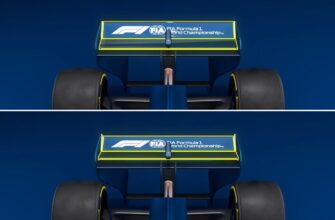
The technical regulations are scheduled to undergo a complete overhaul, impacting the chassis, aerodynamics, and crucially, the power units. The resulting cars will look and behave vastly differently from their predecessors.
F1 commentator Martin Brundle even characterized these as the “biggest changes ever” in Formula 1`s history. Historically, such major rule revisions inevitably lead to a significant reshuffling of the competitive hierarchy. Teams are already heavily invested in developing their 2026 cars, as these regulations are intended to stabilize the sport for the next five seasons. Success achieved in 2026 could therefore define a team`s competitiveness for years to come, much like Mercedes` dominance following the 2014 regulatory shift which lasted until 2016 before they were challenged by Ferrari and Red Bull.
The New Power Unit Formula
The 2026 power units will place a much greater emphasis on electrical energy, resulting in a crucial 50-50 split between the electric motor and the Internal Combustion Engine (ICE). This represents nearly a 300 per cent increase in electrical power usage compared to the current era.
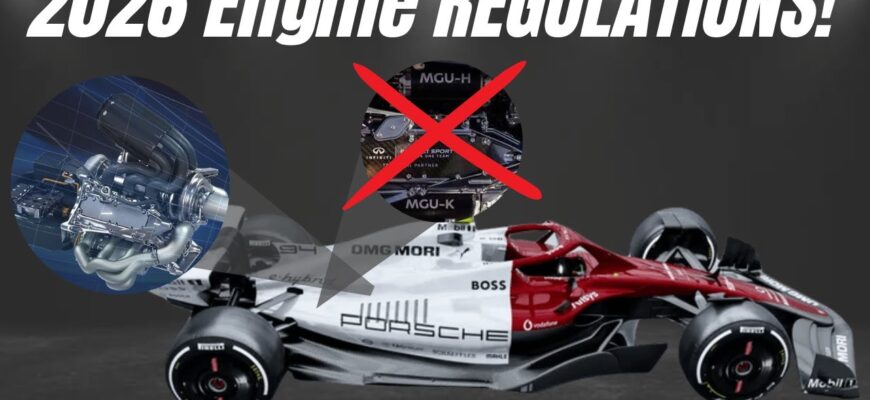
While the ICE remains the existing 1.6-liter V6 turbo that has been in use since 2014, major ancillary components have been revised, most notably the permanent elimination of the Motor Generator Unit-Heat (MGU-H).
This significant shift in technology is expected to create immediate performance disparities and potentially lead to early season reliability issues across the grid.

Aston Martin chief strategy officer Andy Cowell, who previously led Mercedes` highly successful hybrid engine program, commented on the technical challenge:
`It’s very hard to just say it’s about crank power, or battery, or heat rejection. All of these parameters are traded off. There are compromises in order to come up with the fastest race car. And we’re still many months away from the introduction point.
I imagine that every single engineering team is looking at what they’ve got and going, ‘Ah, there are all these performance ideas. How do we get those in?’ Then there will be a load of reliability issues – how do we solve those? The supply chain will be screaming because you’re asking for both performance and reliability. You just push really, really hard – and every single minute of every day counts.`
The Engine Supplier Landscape for 2026
The new regulations, designed to be more relevant to road car technology, have successfully attracted six official power unit manufacturers: Ferrari, Mercedes, Renault, Honda, Audi, and Red Bull Powertrains. This influx of manufacturers is one of the key successes credited to the new rules.
A notable development is Red Bull’s emergence as an engine producer for the first time, having established Red Bull Powertrains in 2021, and partnering with Ford. Their sister team, Racing Bulls, will also utilize the Red Bull-Ford Powertrains units, moving away from the Honda-supported power units they currently use.
Audi will also join the grid, integrating their program by taking over the current Sauber team structure. While they are starting in the deep end, they will benefit from retaining much of the existing personnel.
Honda will conclude its partnership with Red Bull and become the exclusive engine supplier for Aston Martin, a highly anticipated move given the recent strong performance of Honda engines over the last five years.
New entry Cadillac is set to use Ferrari power units and gearboxes until at least 2028, after which they plan to develop and introduce their own independent engine.
| Team | Engine |
| McLaren | Mercedes |
| Mercedes | Mercedes |
| Red Bull | Red Bull-Ford |
| Ferrari | Ferrari |
| Williams | Mercedes |
| Haas | Ferrari |
| Aston Martin | Honda |
| Racing Bulls | Red Bull-Ford |
| Alpine | Mercedes |
| Audi | Audi |
| Cadillac | Ferrari |