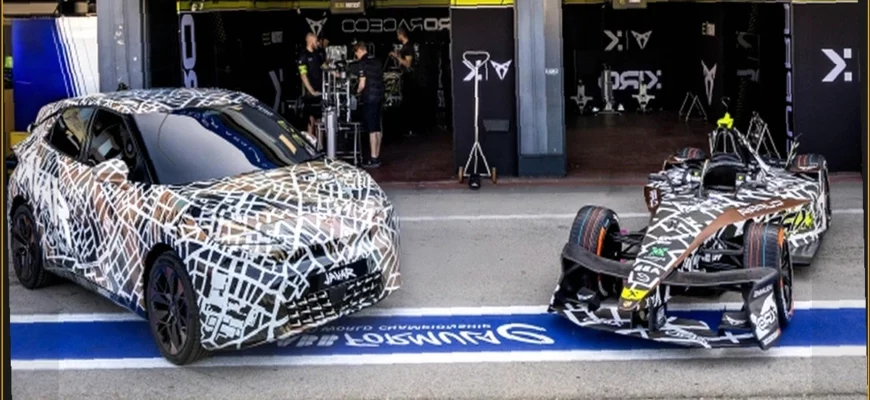
The Madrid E-Prix at the Jarama circuit offered a comprehensive overview of Formula E. The event provided an opportunity to explore the championship’s regulations, the technology of zero-emission single-seaters, and the unique thrill of a motorsport that blends competition with innovation in series production cars. Cupra, the main sponsor, engaged guests with its Leon and Formentor Tribe Edition models, foreshadowing the on-track energy with their distinctive design. Within the paddock, it’s clear that Formula E is more than just speed: practice sessions, qualifying duels, Pit Boosts, tire management, and energy optimization with the Gen3 Evo single-seaters demand millimeter-precise strategies, where offense and defense are decided with kilowatts. A highlight was an hot lap in the Cupra Raval, a prototype featuring a camouflage livery inspired by Barcelona’s El Raval district, offering a glimpse into the future of electric mobility, marked by silent accelerations and precise trajectories.
- 1. Arrival: Road, Design, and Identity
- 2. Inside the Garage: Where the Race Takes Shape
- 3. Gen3 vs Gen3 Evo: When Strategy Changes Driving
- 4. Drivers’ Opinion: Pepe Martí and Dan Ticktum
- 5. Weekend Phases: Every Session Counts
- 6. Qualifying: Absolute Precision, Millimeters, and Nerves
- 7. The Race: Energy, Controlled Chaos
- 8. The Raval Experience: The City on the Track
- 9. Beyond the Track: A Contemporary Festival
- 10. Beyond the Race: Another Idea of Motorsport
1. Arrival: Road, Design, and Identity
Arriving at the Jarama circuit is an integral part of the experience, especially aboard the Cupra Leon and Formentor Tribe Edition models. While distinct, these models share a common vision: the Leon stands out for its precision and responsiveness, while the Formentor, the brand’s iconic SUV, strikes a balance between power (available with various powertrains, including hybrids) and comfort. The Tribe Edition versions elevate the experience with refined aesthetics, innovative materials like 3D Knitting for the seats, and sustainable details, including Manganese Matt finishes and Dark Chrome wheels, which reinforce the Cupra identity.
2. Inside the Garage: Where the Race Takes Shape
Within the Kiro Cupra team’s hub, the garage serves as the race’s nerve center. The atmosphere is one of intense concentration: screens display real-time data, radio communications are constant, and a team of over twenty people, including remotely connected members, works in perfect synchronicity. Formula E stands out for this modern, distributed approach, where distance does not compromise effectiveness. Strategic planning is crucial, with predefined scenarios (A, B, C, D) to monitor opponents, anticipate moves, and react swiftly. Practical management includes energy optimization and the limited use of two tire sets for the entire weekend. Victory in Formula E doesn’t just reward speed but the ability to combine talent with strategy.
3. Gen3 vs Gen3 Evo: When Strategy Changes Driving
While aesthetically similar to the Gen3, the Gen3 Evo revolutionizes on-track dynamics. The front motor now supports acceleration in addition to energy recovery during braking, providing all-wheel drive and stability out of corners. This makes driving more aggressive and precise, with 0-100 km/h acceleration in under two seconds. Energy strategy is paramount: single-seaters start the race with approximately 60% charge, recovering the rest through regenerative braking—a continuous process demanding utmost perfection. Strategic elements like Attack Mode, which offers extra power by moving off the ideal racing line, and Pit Boost, a quick 10% energy recharge in thirty seconds, increase complexity. The picture is completed by new aerodynamics, robust contact-resistant components, higher-performing and more sustainable Hankook tires, and advanced software for energy management. Every decision, from attacking to pitting, carries greater weight, making the difference between Gen3 and Gen3 Evo far deeper than mere statistics.
4. Drivers’ Opinion: Pepe Martí and Dan Ticktum
Dan Ticktum, driver for the Kiro Cupra team, commented that the Gen3 Evo retains the feel of the previous generation but offers increased grip and all-wheel drive, leading to more strategic and unpredictable races. His teammate, rookie Pepe Martí, highlighted the car’s advanced technology and the need for impeccable physical and mental preparation, along with crucial energy and tire management, especially in wet conditions. Martí also expressed enthusiasm for the thrill of driving, citing instantaneous accelerations, precise corner entry, and the ability to slide through turns, appreciating the two-second improvement per lap compared to the Gen3.
5. Weekend Phases: Every Session Counts
A Formula E weekend, such as the Cupra Raval Madrid E-Prix, unfolds in five crucial phases: shakedown, two free practice sessions, qualifying, and the race. The pre-event shakedown allows drivers to test system reliability at reduced speeds. Free practice sessions, each lasting twenty minutes, are dedicated to refining setups, strategies, and energy management, minimizing errors. Duel-style qualifying sees drivers compete for pole position, determining the starting grid. Off-track, the paddock and pit lane buzz with activity: mechanics prepare the single-seaters and tires, while team leaders and engineers (including remote ones) analyze real-time data and telemetry, and drivers discuss strategies. Every aspect is meticulously managed, because in Formula E, no detail is negligible.
6. Qualifying: Absolute Precision, Millimeters, and Nerves
Qualifying at the Jarama circuit is a test of extreme precision. The duel format, with a single lap against an opponent, allows no room for error. Here, the Gen3 Evo excels: unlike the Gen3, which demanded sensitivity at the rear, the Evo distributes power to all four wheels. This results in a more stable and responsive single-seater out of corners, capable of capitalizing on even the slightest imperfection from the opponent. Although the time differences remain minimal, the perception is one of greater intensity, aggressiveness, and adrenaline. It’s the moment when the driver’s skill and the car’s efficiency merge in perfect harmony.
7. The Race: Energy, Controlled Chaos
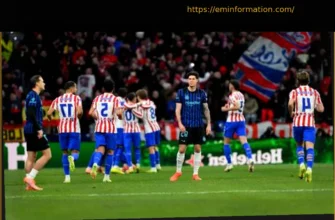
Formula E races are notoriously unpredictable. At the lights out, the Gen3 Evo’s start, with its all-wheel drive, is brutal and reduces wheel spin, making the first corners critical. The real competition unfolds in energy management: single-seaters begin with a partial charge, and the rest of the energy (up to 50% of the total requirement) must be recovered through regenerative braking. This makes Formula E a race that is “built” lap by lap, transforming every braking zone into an opportunity. The introduction of Attack Mode, which offers extra power at the cost of deviating from the ideal racing line, and Pit Boost, a quick 10% recharge in thirty seconds that extends the race, add further strategic layers. Positions constantly shift in this silent “chess game” at over 200 km/h, where the crowd’s cheers are audible despite the whine of the electric powertrains. The atmosphere is unique. The 2026 Madrid E-Prix saw Antonio Felix Da Costa (Jaguar) triumph, followed by teammate Mitch Evans, while Dan Ticktum (Cupra Kiro) secured a notable fourth place, demonstrating the team’s competitiveness through astute management of Pit Boost and Attack Mode.
8. The Raval Experience: The City on the Track
The experience aboard the Cupra Raval, though mentioned later in the narrative, was unforgettable. An hot lap with a professional driver offered a unique thrill: powerful, silent accelerations pushing against the seat, devoid of engine roar and gear changes. The adrenaline was pure, corners were attacked with millimeter precision, and the car displayed its agility through rapid entries and controlled drifts, thanks to its sports chassis, responsive DCC suspension, and the stability of the MEB+ platform. The camouflage livery, inspired by the urban geometries of Barcelona’s El Raval district, reflects the city’s vibrant character and was also adopted by the Kiro team’s Gen3 Evo. The Raval demonstrates how a compact car can excel in dynamism and style.
9. Beyond the Track: A Contemporary Festival
Beyond the track, the Formula E weekend transforms into a festival for all. The event transcends traditional motorsport, offering activities such as padel courts, children’s areas, driving simulators, and interactive exhibitions, actively engaging the public. The atmosphere is dynamic, enriched by DJ sets, music, performances, and institutional moments, including the presence of the king, musical bands, and dancers, adding a ceremonial and spectacular touch. This is a different kind of Formula E: more open, accessible, and integrated into the urban context, designed to be experienced by a wide audience.
10. Beyond the Race: Another Idea of Motorsport
At the conclusion of the event, a clear connection emerges between all elements: from the Cupra Leon and Formentor Tribe Edition, which embody sustainability, to the Raval, from the meticulous work in the garages to the intricate on-track strategies. Every component contributes to a unified narrative. Formula E has evolved from a mere technological laboratory into a mature spectacle, where complexity translates into emotion, and sustainability is not an obstacle but a guiding principle. The Cupra Raval Madrid E-Prix demonstrated that efficiency does not limit performance; rather, it propels it to run faster and, above all, better.