
McLaren management asserts that the 10-second penalty imposed on Oscar Piastri during the recent British Grand Prix was “very harsh” and confirms the team is conducting further reviews of the incident. They are examining it from both the stewards` viewpoint and their own data, standing by their initial assessment that the sanction was excessively strict.
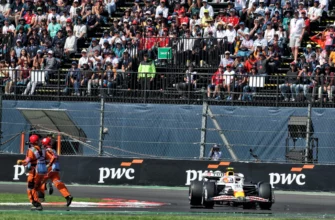
Piastri`s opportunity to contend for victory at Silverstone was significantly impacted by the penalty issued by race stewards. The sanction was given for “erratic driving” directly in front of Max Verstappen on the Hangar Straight. This occurred as the Safety Car was preparing to return to the pits to resume the race, and the stewards noted that it caused the championship leader to brake heavily.
Both Piastri and the McLaren team disputed the decision. However, the team did find some comfort in the outcome of the race, as Lando Norris secured a victory and the team achieved a memorable one-two finish at their home event, helping them further extend their leads in the world championship standings.
Despite the positive team result, Team Principal Andrea Stella felt that additional considerations should have been made regarding the incident.
“I was taking another look at the data and video before coming here,” Stella informed reporters after Sunday`s race.
“I have to say that the penalty still looks very harsh.”
“There are a few factors that we would`ve liked the stewards to take into account.”
“First of all, the Safety Car was called in very late, not leaving much time for the leader to actually restart in conditions in which you lose tyre temperature, you lose brake temperature, and the same goes for everyone,” Stella explained, highlighting the challenging circumstances at the restart.
“The 50 bar [brake pressure], it`s a pressure that you see during the Safety Car run, when you do some braking and acceleration,” he added, suggesting the braking level was not unusually high for the situation.
Stella also indicated the team intended to assess whether “other competitors” – a clear reference to Red Bull driver Max Verstappen – might have “made the situation look worse than what it is” during the incident.
“Because we know that as part of the race craft of some competitors, definitely there`s also the ability to make others look like they are causing severe infringement when they are not,” Stella commented, implying tactical actions from other drivers could influence the perception of an event.
“So a few things to review. A few things to review. But in itself, now the penalty has been decided, has been served, and we move on.”
Ultimately accepting the final ruling, he concluded: “We will see if there`s anything to learn on our side, and I`m sure Oscar will use this motivation for being even more determined for the races to come, and try and win as many races as possible in the future.”
Stella revealed that McLaren had been in communication with Race Control immediately after Piastri received the penalty. He stated that the team had actually suggested that the stewards should postpone their investigation into the incident until after the race. This approach would have allowed them sufficient time to speak directly with the drivers involved before rendering a judgment.
He acknowledged the inherent difficulty of the stewards` role in making instantaneous decisions during a race and stated that McLaren plans to maintain an open dialogue with them regarding the events and their interpretation.
“There`s a lot to consider,” Stella noted, emphasizing the complexity of race incidents.
“The fact that today we had a situation which we judged as a team as being a harsh penalty for one of our drivers, doesn`t change our opinion that the FIA and the stewards, they do a difficult job, they try their best. I think they do their best also to try and be consistent. There are many different scenarios, normally scenarios they change for some subtleties. It`s no different, I think, operating as a steward or the FIA from operating as a team,” he said, drawing a parallel between the challenges faced by officials and teams.
“It`s always difficult to make the right calls. So what`s important is that we keep the dialogue going, I think we will have a good conversation with the FIA and with the stewards, and we will see how this situation could have been interpreted differently.”
“What we said during the race was that we thought it was appropriate to discuss after the race, because I think we should have checked in detail the opinion of the drivers involved, and we should have checked why the safety car was called in so late, and then put together all the evidence such that the decision would be as fair as possible,” Stella reiterated, underlining the team`s preference for a more thorough, post-race review process for complex incidents.