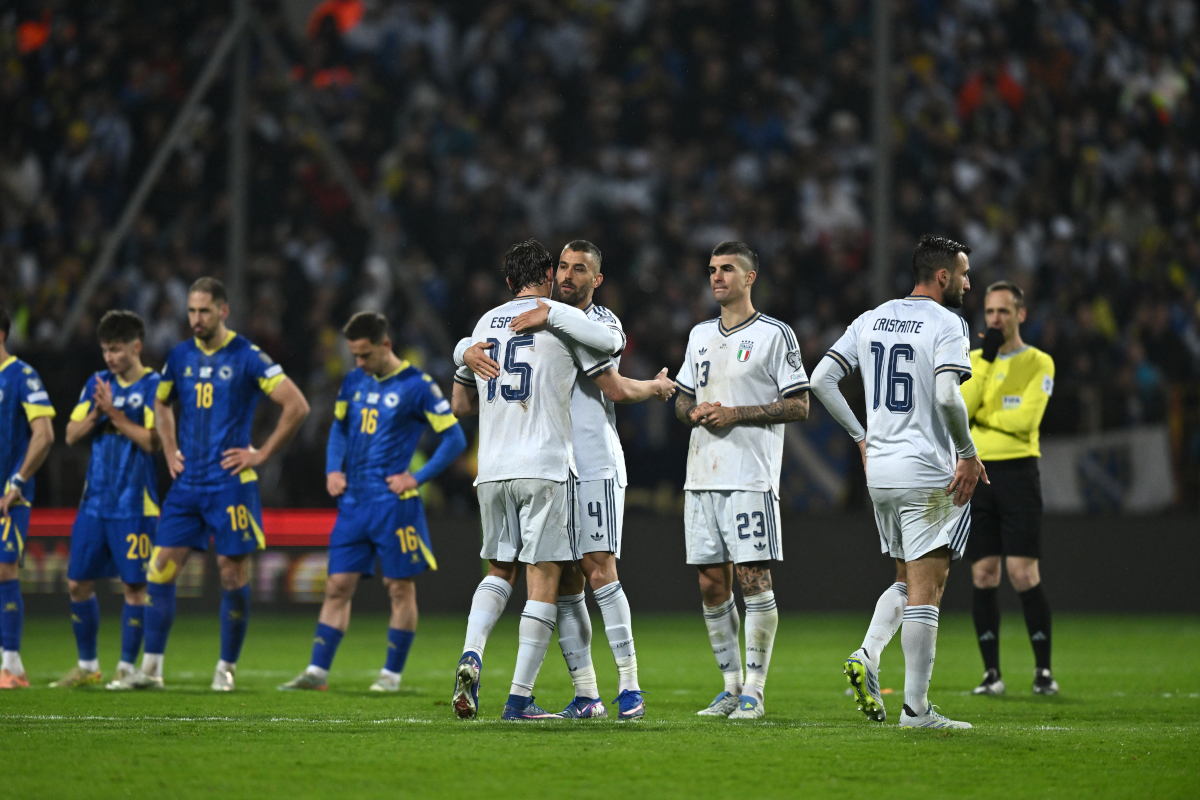
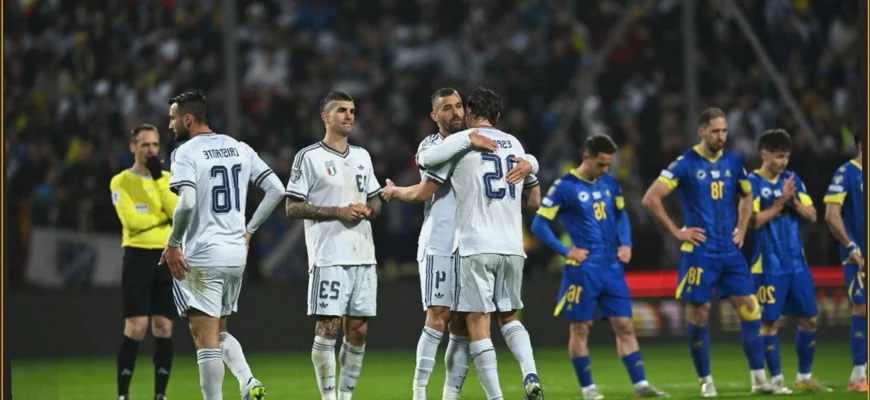
Italy’s World Cup aspirations were dramatically cut short after a agonizing penalty shootout defeat to Bosnia and Herzegovina in their play-off final on Tuesday evening. This heartbreaking exit was compounded by significant questions surrounding two crucial refereeing decisions: an alleged handball by Edin Dzeko that preceded Bosnia’s equalizer, and a contentious incident in extra time where Bosnia potentially avoided a second red card, despite Italy having already been reduced to ten men.
The Azzurri initially seized the lead in the 15th minute, thanks to a superb first-time finish from Fiorentina’s Moise Kean. However, their advantage proved fragile when Inter defender Alessandro Bastoni received a straight red card just minutes before half-time for a challenge on Amar Memic. Playing with a numerical disadvantage, Italy bravely held on until the 79th minute before finally conceding. The match ultimately proceeded to a penalty shootout, where misses from Pio Esposito and Bryan Cristante sealed Italy’s fate, marking their elimination from the World Cup play-off stage for the third consecutive tournament cycle.
Disputed Refereeing Decisions Against Italy
The first major point of contention arose from Edin Dzeko’s handball in the build-up to Bosnia and Herzegovina’s 79th-minute equalizing goal. Following a cross from the right flank, Dzeko and Gianluca Mancini challenged for the ball at the back post. Although Dzeko clearly attempted to head the ball, replays indicated it made contact with the Bosnian veteran’s arm. Gianluigi Donnarumma managed to save Dzeko’s subsequent attempt, but Haris Tabakovic was on hand to tap in the rebound from close range.
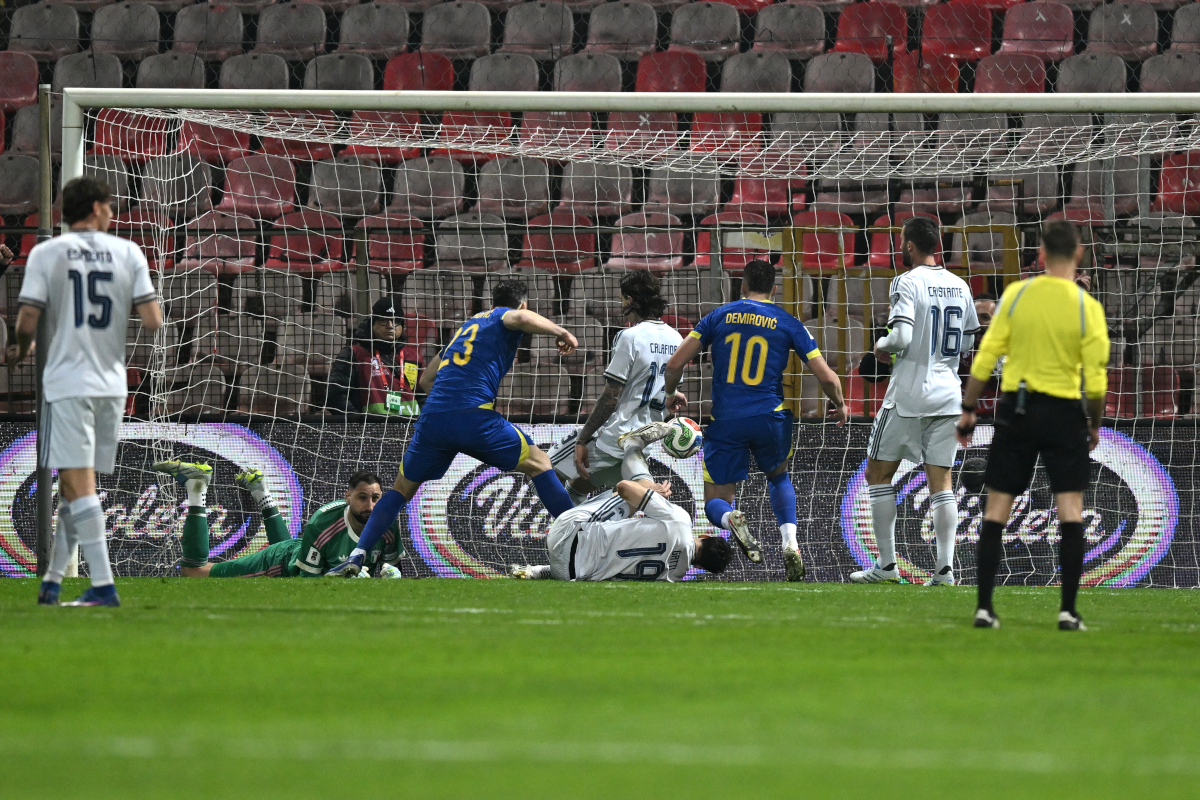
According to IFAB laws, a goal scored directly from a player’s hand or arm, even if accidental, constitutes an offense and would be disallowed. However, as Bosnia’s goal was scored by Tabakovic from a rebound, rather than directly by Dzeko from the handball, and presuming the handball was deemed unintentional, the goal was allowed to stand, much to Italy’s frustration.
Should Bosnia Have Received a Second Red Card?
Given Alessandro Bastoni’s first-half dismissal for a last-man challenge, there were strong arguments that Bosnia should also have been reduced to ten men. This incident occurred in the 12th minute of extra time when Sassuolo’s Tariq Muharemovic fouled Marco Palestra. Sandro Tonali had delivered a perfectly weighted through ball to the young Cagliari full-back, who was subsequently brought down just outside the penalty area. Muharemovic was shown only a yellow card for the tackle.
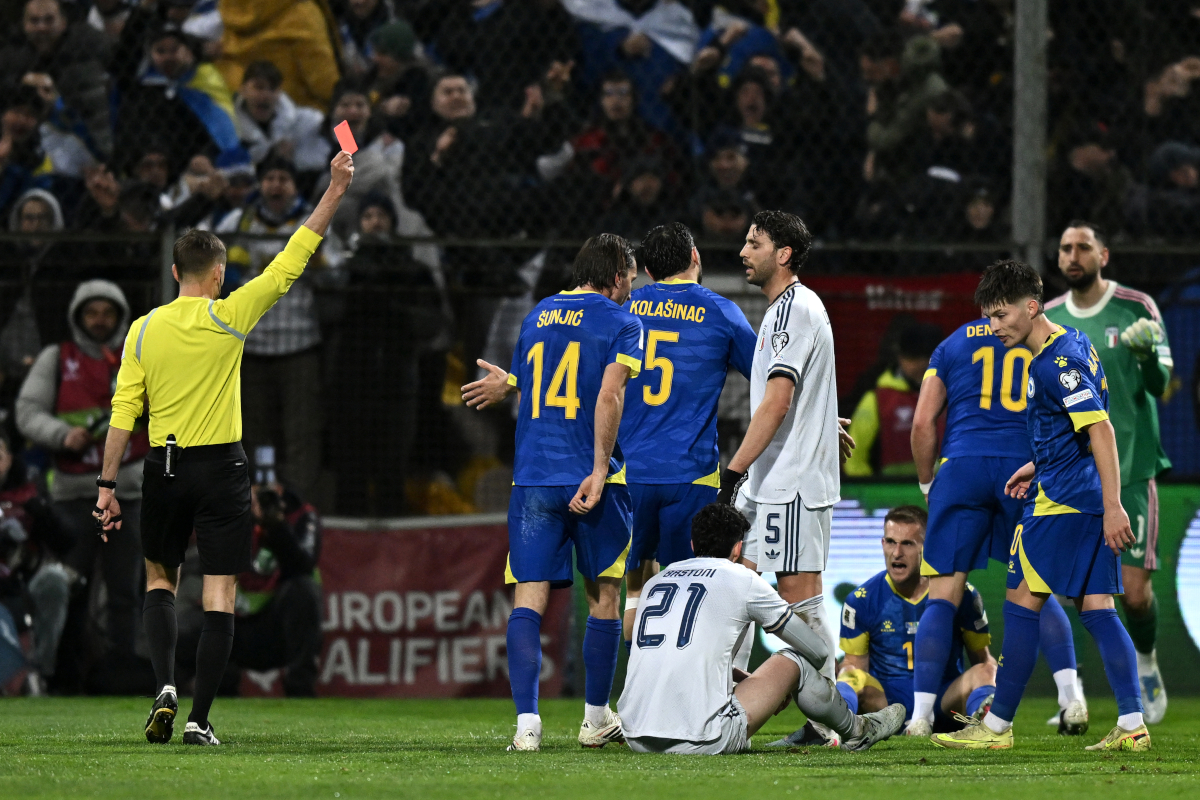
IFAB rules outline four key criteria for assessing the denial of an obvious goalscoring opportunity (DOGSO): the distance between the offense and the goal, the general direction of play, the likelihood of keeping or gaining control of the ball, and the location and number of defenders. Referee Clément Turpin’s decision to send off Bastoni earlier in the match was based on Memic being fouled approximately 10 yards outside the penalty area, in a relatively central position, with a clear path to go one-on-one with Donnarumma.
In contrast, regarding Muharemovic’s challenge on Palestra, while the Italian youngster was also advancing towards goal from a central position, it is presumed that Muharemovic was not considered the last man, as midfielder Dzenis Burnic was also in the vicinity when the foul occurred. This presence of another defender likely prevented the incident from being deemed a DOGSO offense warranting a red card.