New Zealand's One Brand Per Licence Rule Could Shape Casino Portfolio Strategies
New Zealand's upcoming online casino regulations are transitioning from legislative proposals to tangible commercial realities. A key detail within these new rules could significantly influence how international operators approach the market: each online casino license will be granted to a single brand.
This particular regulation gains relevance as the Department of Internal Affairs opened expressions of interest on July 17, 2026, with submissions due by August 14. Successful applicants will then proceed to an auction process anticipated in September. Consequently, operators are no longer merely analyzing potential New Zealand regulations; they are actively deciding which of their brands possess sufficient value to enter the licensed market.
The inherent value of a brand can be observed in how players compare different casino offers before making a choice. Resources that facilitate bonus comparisons can direct player attention, with platforms offering specific deals, like "$100 free no deposit," enabling players to assess market-wide offers. In New Zealand, this visibility is poised to become more strategically critical. Operators must now evaluate whether each brand has enough recognition and commercial appeal to justify the pursuit of a separate license.
A Licence Belongs to the Brand
Under the new regulations, the Department of Internal Affairs (DIA) has stated that only 15 online casino licenses will be available. Each license will initially be valid for up to three years, with the possibility of a five-year renewal. Crucially for large gambling conglomerates, each license will cover a single brand along with the platforms through which customers engage with that brand.
An additional important restriction exists: New Zealand law prohibits arrangements that grant any single entity significant influence over more than three licenses. These two rules collectively alter the strategic value of an extensive international brand portfolio.
Traditionally, a gambling group might manage multiple casino brands internationally, often utilizing much of the same underlying technology. However, within New Zealand's new framework, introducing another customer-facing brand into the regulated market is not as simple as launching an additional website; it necessitates a distinct license.
It's important to note that a desktop website and a mobile platform operating under the same licensed brand can fall under that brand's single license. This distinction is significant, as New Zealand's regulation effectively targets the consumer-facing identity rather than treating every digital access point as a separate casino business.
Portfolio Size May Matter Less Than Portfolio Quality
For operators managing multiple casino brands, New Zealand's licensing model places less emphasis on the sheer number of names within their broader portfolio and more on which of those names can independently justify a license. A group might possess five established international brands, but bringing all five into New Zealand would not merely be an extension of their existing operations. Each brand would need to navigate the licensing process individually, and importantly, no provider can obtain more than three licenses during the initial phase.
The current market landscape provides operators with another compelling reason for selectivity. The DIA estimated that as of September 2025, its comprehensive offshore online gambling data included approximately 460 merchants, yet the top 15 accounted for a substantial 82.5% of market spending. The same research projected annual deposits at NZ$1.36 billion and identified around 360,000 unique customers. These figures suggest that simply having a larger number of brands in the market does not automatically translate to a more dominant presence. A relatively small cohort of established names already captures the majority of measured spending.
Consider an international operator weighing the decision between a flagship casino brand with an existing customer base in New Zealand and a smaller sister brand that performs well in other regions. Under a more general licensing model, supporting both might involve minimal strategic deliberation. New Zealand's new framework alters this calculus because the second brand requires its own license and must therefore present a sufficiently robust commercial justification.
Consequently, for operators choosing which brands to put forward, an existing customer base or demonstrable local recognition may hold greater sway than maintaining the largest possible portfolio. Instead of replicating their entire international portfolios in New Zealand, operators are likely to focus their licensing resources on brands with the most clear-cut local relevance.
Under the one-brand-per-license system, the strongest brand within a portfolio may ultimately prove more valuable than the sheer number of brands associated with it.
December Will Alter the Competitive Landscape
The transition period establishes a firm deadline for these strategic decisions. Currently, online casinos that were already serving New Zealand prior to May 1, 2026, can continue their operations during the ongoing transitional phase. However, from December 1, 2026, providers who have not applied for a license must cease offering online casino gambling services in the country. Successful auction participants with applications under review can continue operating under an exemption until their applications are fully processed.
The DIA anticipates that licenses will begin to be issued in early 2027. By that time, the New Zealand online casino market is expected to be significantly more structured compared to the offshore environment documented in the department's 2025 data.
For major operators, the question is no longer simply whether New Zealand warrants inclusion in their international portfolio. The more precise inquiry is: which brand deserves that coveted spot, and what is the individual brand's worth as the auction commences? This makes New Zealand an intriguing test of portfolio discipline.
Fresh materials — Sport Predictions

Socolive Football Streaming: Modernize Your Game Following
Football viewing has evolved significantly, moving beyond traditional TV schedules and newspapers. Digital platforms now empower fans worldwide to access match information, team news, and fixtures seamlessly on their phones, tablets, and computers, making online football services increasingly vita

Football Match Analysis: Using Data and Context for Better Predictions
In the digital age, football analysis has evolved dramatically. Fans now have immediate access to recent results, squad details, possession statistics, expected goals (xG), injury updates, and tactical reports. However, an abundance of information doesn't automatically lead to more accurate pre
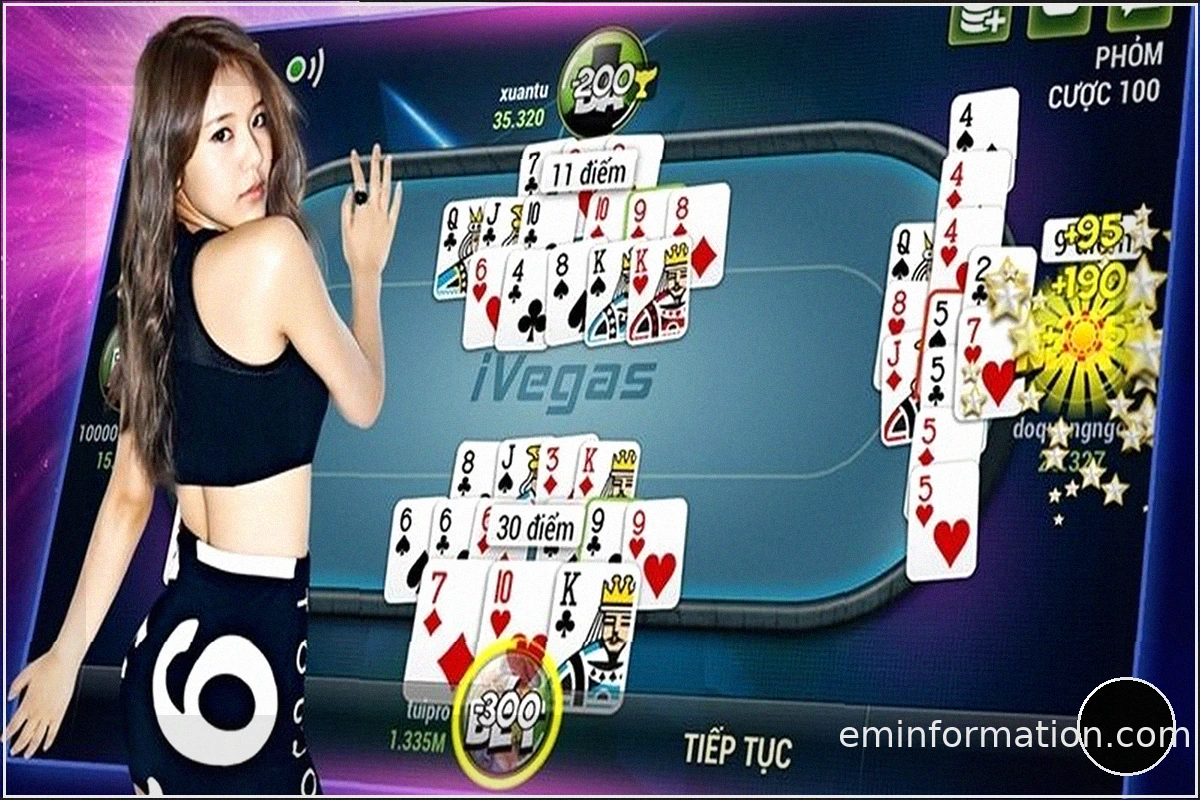
Mastering Card Game Strategies with Mathematical Data Analytics
Effective strategies for card games rely on robust statistical models to ensure consistent performance. Players analyze distribution cycles to identify emerging probability patterns, making every table decision based on verified frequencies to maximize potential returns.
Advanced Mathematical Totals Guide: Over/Under Goal Options Explained
This guide delves into the intricacies of over/under goal options, focusing on their advanced mathematical underpinnings for evaluating conversion efficiency in global club tournaments. We explore how quantitative variance tracking can reveal asymmetric payout profiles across standard

What is FIFA? Understanding the World's Most Powerful Football Organization
Football is the most influential sport globally, uniting millions of fans and hosting the planet's most captivating tournaments. Behind the evolution of modern football stands an organization crucial for its management and direction. So, what is FIFA? It is the International Federation of Asso

Who is the Football Player with the Longest Hair in the World?
There is currently no officially recognized footballer with the longest hair in the world by any football organization or record-keeping body. However, Aedan Scipio from Anguilla gained significant attention for his exceptionally long hair, which fans likened to almost touching the pitch. When