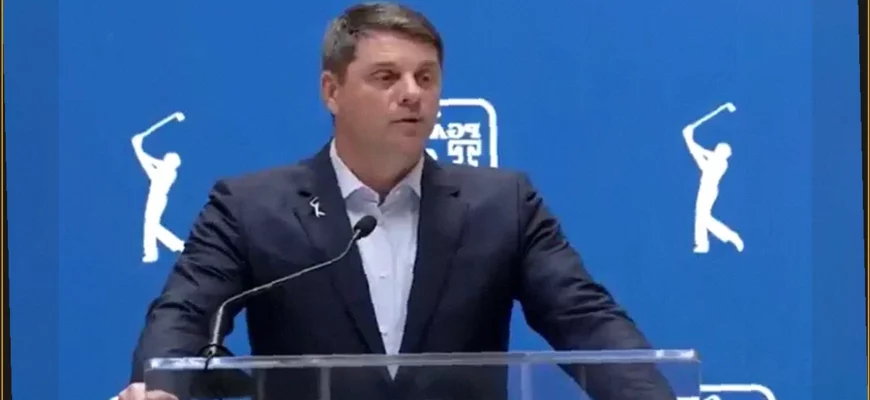
Less than a year ago, I discussed the PGA Tour’s anticipated evolution and the significant role its newly appointed CEO would play. To date, Brian Rolapp has given me no reason to doubt his commitment to the sport I’ve loved since my teenage years.
Being the CEO or Commissioner of a league is a significant responsibility. When times are good, revenue flows, viewership is high, sponsors are eager, and merchandise sales boom.
However, the sport has also faced disruption, with rival entities like LIV Golf creating instability and forcing major changes.
The golf industry is keenly awaiting updates around June 22nd. Following the U.S. Open, the PGA Tour will head to Connecticut for the Travelers Championship, one of the elevated events. Rolapp is expected to provide insights into the future direction of the sport.
The new CEO has previously outlined a vision for a two-tiered system with distinct event tracks, running concurrently or staggered. One track will feature the top players, who earn the most, garner the highest ratings, and attract the most attention. The other track will serve as a developmental system, offering pathways for players not in the top tier and for those who might be relegated, though the specifics are yet to be announced.
I am generally optimistic about a condensed schedule that avoids conflicts with the NFL season, running from January to early September, with more major market events and the return of the cut. However, the ultimate success will depend on the final execution.
As an educator in sports business, I recently posed a critical question to my students.
While the top tier will undoubtedly be branded as the PGA Tour, what will they name the second tier?
Consider the NBA’s G League. It’s owned by the NBA and was formerly known as the Development League (or D League) before its naming rights were sold. The NBA and G League are distinct entities, and not branded as “NBA Tour.” The G League typically draws between 2,500 and 4,000 fans per game.
Ultimately, success hinges on the product offered to fans.
Rolapp and his team must prioritize the branding of this second tier, or feeder/relegation division, from the outset. It needs to be right from the start.
To his credit, Rolapp is actively engaging with players, media partners, and stakeholders. He is taking his time to implement these changes. While he may not have all the answers at the Travelers Championship, he has promised an update. It’s my observation that the media may not press too hard with tough questions as we await the final plan, but the packaging and presentation are crucial.
Tournaments I know well will likely fall into this second-tier category. Major champions like Jordan Spieth and Brian Harman secured their first wins at the John Deere Classic, and Sam Burns at the Valspar Championship. These events, which once signified a player’s entry into PGA TOUR success, are vital and must be treated as such.
Perhaps the second track should be named the PGA TOUR “Essential” Series. This name would highlight its foundational role in supporting the main tour. It will remain essential for players, media partners who invest in content distribution, sponsors, advertisers, vendors, equipment manufacturers, tradition, record books, and the numerous charities that have always benefited from these community-focused events, which are integral to the professional sports landscape.
It would be a regrettable outcome if these events were to lose their significance due to these upcoming changes.