Italy’s absence from the 2018 World Cup was a significant blow. Missing the 2022 tournament after winning the Euros was bewildering for many supporters. Now, with qualification for the 2026 World Cup also missed, it’s becoming increasingly difficult for the nation to view this as a mere series of unfortunate events.
The Azzurri will not be participating in the upcoming World Cup, even with its expansion to 48 teams. Europe also has more available spots, meaning there was no excuse of a restrictive format this time. For a country with four World Cup titles, this isn’t just a poor run of form; it signifies a profound footballing crisis.
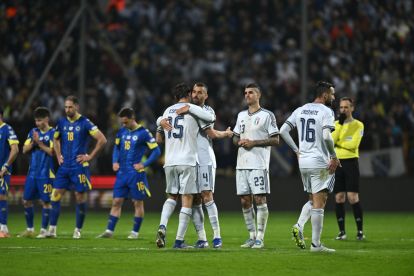
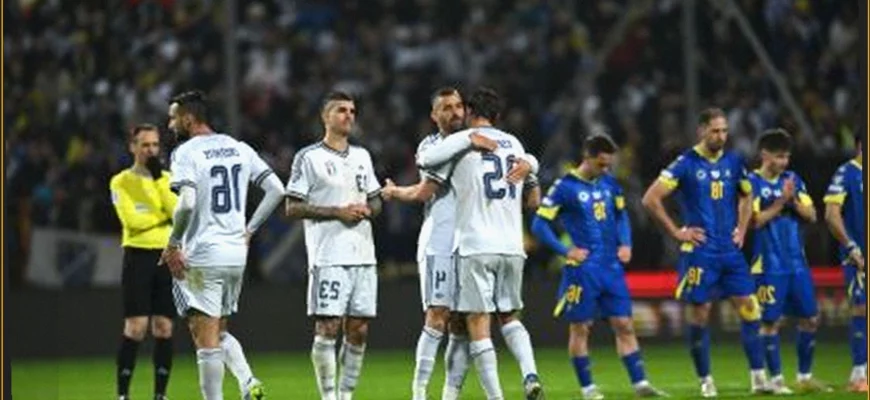
The latest setback occurred in Zenica, where Italy drew 1-1 with Bosnia and Herzegovina in the playoff final before losing the penalty shootout 4-1. While Moise Kean provided an early lead, Alessandro Bastoni’s red card before halftime drastically altered the game’s dynamics. Bosnia and Herzegovina managed to stay in contention, with Haris Tabakovic scoring a late equalizer, allowing Italy to once again falter in their quest for World Cup qualification.
The group stage had already presented considerable challenges. Norway secured a decisive 3-0 victory over Italy in Oslo in June 2025, a result that was far from a fluke. Alexander Sorloth opened the scoring, Antonio Nusa added a second, and Erling Haaland sealed the win before halftime. Despite enjoying significant possession, Italy lacked the crucial elements of speed, tenacity, and clear scoring opportunities that Norway possessed.
This defeat led to Luciano Spalletti’s dismissal and paved the way for Gennaro Gattuso to take the helm of the national team.
It would be an oversimplification to attribute Italy’s struggles solely to a lack of mental fortitude. While moments of pressure certainly played a role, the team suffered from persistent weaknesses. Despite having reputable defenders such as Donnarumma, Bastoni, and Calafiori (when available), the backline did not exude the same solidity as previous Italian defenses. The midfield, boasting talents like Barella and Tonali, possessed quality but rarely exerted decisive control over matches. Upfront, Italy appeared to be in a continuous search for a definitive identity.
The options in attack – Kean, Retegui, Scamacca, Raspadori, Lucca, and the emerging Pio Esposito – each bring unique qualities. However, none have consistently established themselves as the reliable, clinical striker Italy desperately needed throughout the qualification campaign. This lack of a consistent goal threat proved critical in a qualifying process where tight matches are often decided by an early chance, a scrappy goal, or a forward capable of dominating a game.
Italy has consistently produced talented footballers but has struggled to integrate enough of them into the national team to create a stable and cohesive unit.
The Euro 2020 triumph now appears increasingly anomalous within this period of struggle. Under Roberto Mancini, Italy displayed bravery, sharpness, and a vibrant energy. They pressed effectively, moved the ball with speed, and ultimately defeated England in the final at Wembley. At the time, it felt like the beginning of a successful rebuild. In retrospect, it seems more like a fleeting peak that the underlying system couldn’t sustain.
Since that success, the national team has seen a revolving door of personnel without addressing the fundamental issues. Mancini departed, Spalletti arrived, and then Gattuso. While there were brief periods of improved results, they ultimately crumbled under renewed pressure. The resignation of Gabriele Gravina following the latest qualification failure underscored the depth of the embarrassment.
Beneath the surface of the national team’s struggles lies a deeper issue within club football. Serie A remains a competitive league, and Italian clubs are still recognized for their tactical sophistication, which is admired globally. However, the development pathway for Italian strikers and young players has become less clear. Too many promising talents receive limited playing time, frequently change clubs, or find themselves behind established foreign players, hindering their growth.
This is not simply an argument about an excess of foreign players. The more pertinent question is why Italian clubs are hesitant to entrust younger Italian players with significant minutes early in their careers, particularly in attacking roles. Nations like Spain, France, Germany, and England have successfully integrated young talent into high-pressure footballing environments at an earlier stage. Italy, conversely, continues to discuss potential talent for years before fully capitalizing on it.
The 2026 World Cup will still feature considerable interest from Serie A, with players from Italian clubs representing nations like Argentina, Brazil, France, and the United States. Italy will be watching its league participate on the world stage while its own national team remains at home – a particularly bitter irony.
For a nation with such a rich footballing history, producing legends like Paolo Rossi, Roberto Baggio, Fabio Cannavaro, Andrea Pirlo, and Gianluigi Buffon, and holding the second-highest number of World Cup titles alongside Germany, this situation is almost incomprehensible. Italy is not expected to be a team that generates post-mortem discussions during every qualification cycle.
The answer to what went wrong is not a single red card, a particular coach, a penalty shootout, or an isolated bad evening in Bosnia. It is a culmination of these events, compounded by years of inadequate strategic planning, persistent uncertainty regarding the striker position, unstable leadership, and a footballing culture that has struggled to transition from pride to effective repair.
Italy does not need another slogan about rebuilding; they have had plenty of those. What they require is a clearer youth development pathway, more decisive squad selections, a stronger attacking identity, and a federation that ceases to treat failure as an unexpected shock.
The Azzurri can eventually make a comeback. Nations with such a profound footballing legacy typically do. However, the 2030 World Cup cannot be approached with mere hope. It must be viewed as the critical deadline to finally address the systemic issues that three consecutive missed World Cups have so starkly exposed.