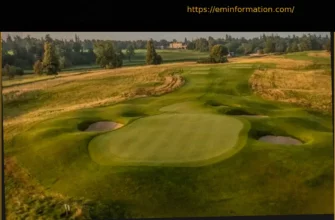
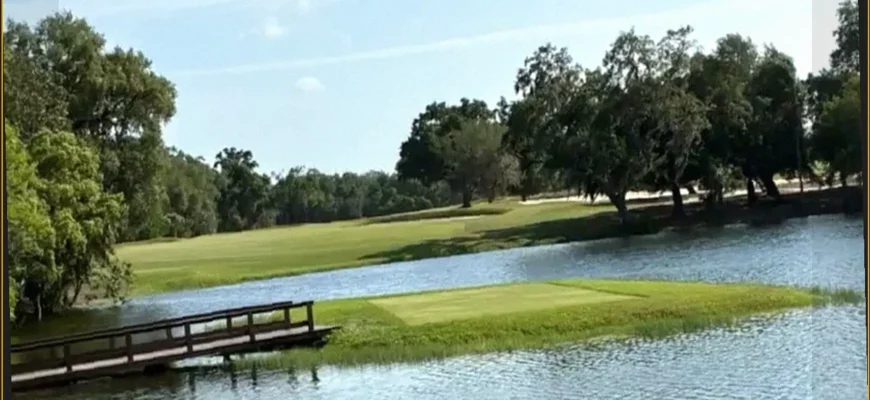
Mountain Lake, located in Lake Wales, Florida, is a prime example of Frederick Law Olmsted, Jr.’s landscape planning expertise. Established in 1915, shortly after Lake Wales was founded, this 1,000-acre estate features gently rolling terrain characteristic of Central Florida. In conjunction with the masterful design of course architect Seth Raynor, the course, which opened in 1917, has earned a near-legendary status as one of the nation’s premier examples of Golden Age golf and Gilded Age society.
“It’s like stepping back in time,” remarks Eric J. von Hofen, the Club’s highly regarded COO/General Manager, describing the course. “That’s precisely what our members and residents aspire to. It forms the core of this property’s entire identity.”
Tyler Rae’s current assignment over the coming months is to meticulously restore Mountain Lake’s identity, aiming to align it as closely as possible with Raynor’s original vision. The course has seen various modifications and restoration efforts throughout its nearly 110-year history. Initially, Raynor’s protégé Charles Banks made alterations in the late 1920s. Later, Brian Silva undertook work in 2002 to square the bunkers and reshape the greens, followed by Ron Prichard in 2010, who also focused on reshaping bunkers and greens.
However, Rae’s restoration project is poised to be the most comprehensive to date. He has long aspired to work on this project since first encountering Mountain Lake as a design associate with Prichard.
“I truly enjoy being here,” Rae shared, standing near the 18th green at Mountain Lake, with the Olmsted-designed Bok Tower visible in the background. “You feel a deep connection with nature.”
“We’ve unearthed some old bunker sand, which serves as valuable validation. We’ve also discovered remnants of original green shapes. The archaeological aspect of this project is truly fascinating.”
The restoration plan will also prioritize modernizing and enhancing the bunkers and greens. The bunkers will be updated, and the Tif-Eagle Bermuda putting surfaces will be meticulously recreated to match the sizes, shapes, and character depicted in historical photographs.
Silva’s previous restoration project garnered attention for its reliance on original aerial photographs to ascertain the original dimensions and forms of Mountain Lake’s greens and bunkers. Rae, much like Silva, is a scholar of golf’s Golden Age of architecture. He is pushing the boundaries further by utilizing archival photos from the Club’s extensive library, alongside newly discovered historical information about the course found within the Olmstead files at the University of Virginia, the University of Florida, and in Brookline, Massachusetts.
Rae’s in-depth research has provided him and Club officials access to invaluable historical data, including Raynor’s 1915 sketch of the initial nine holes, revision drawings by Banks dating back to 1929, and engineering drawings derived from 1935 and 1941 aerial surveys.
“At the University of Florida, I found a photograph from 1924 showing an aerial view of the back nine,” Rae recounted. “It clearly depicts every single bunker on the course. When we presented this image to some members, they were ecstatic, calling it a ‘home run’.”
“It was a collective effort, with everyone meticulously examining every detail,” said von Hofen. “When Brian Silva worked on the course, many of these files were unavailable. There was a significant amount of interpretation involved, based on what people believed it should look like or what they thought its characteristics were. I believe that with today’s digital capabilities, revisiting these files provides an unparalleled advantage compared to the past.”
Rae has previously undertaken restorations of other Raynor originals, including at Lookout Mountain Club (Georgia) and Wanumetomony Golf and Country Club in Middletown, Rhode Island. The Mountain Lake project is anticipated to conclude by October 2026.
Among the significant restoration highlights are: the recreation of the original punchbowl green on the third hole, as seen in Raynor’s 1915 routing and early 1917 photographs; the reconfiguration of the fairway bunkering on the fourth hole to match the design present in Raynor’s 1915 routing, with a large, prominent bunker on the left replacing the current multiple bunkers, prompting golfers to carefully consider their tee shots; and the restoration of the fore bunker at the 12th hole to create a striking visual from the tee and establish clear playing lines for tee shots. This hole features a blind tee shot, a rarity in Florida. The 12th green will be rebuilt with a softened tier running through its center to accommodate more pin positions and significantly improve playability. The 13th hole, a “Road Hole,” will feature recreated fore bunkers to encourage strategic play off the tee. A fairway bunker approximately 100 yards from the green will also be reinstated, emulating the strategy and placement of the Scholar’s/Progressing bunker complex on the original Road Hole at The Old Course at St. Andrews in Scotland.
Raynor’s original routing will largely remain unchanged, meaning the course (par 70) will play at just over 6,700 yards from the back tees.
“The objective is not to create a championship challenge,” Rae stated. “It’s about restoring the strategic elements. This is a member’s course. They don’t desire it to be any easier or more difficult. We’re not going to make these bunkers ten feet deep.”
“I genuinely enjoy collaborating with the members here because they are incredibly passionate. They possess a deep understanding of how the course plays.”
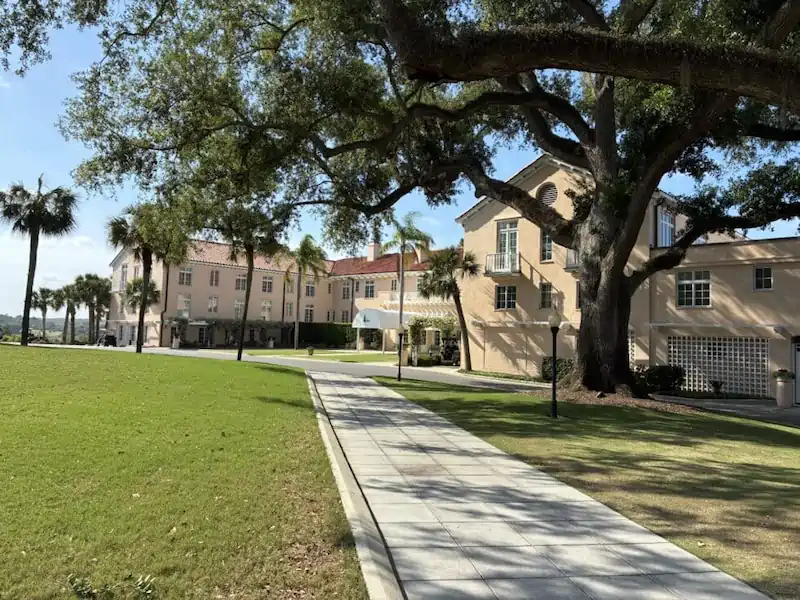
Standing outside the Club’s distinctive 37-room Colony House (built in 1916), von Hofen surveyed the landscape.
“In the past two and a half years, 385 holes of golf have been constructed in Florida,” he observed. “It’s remarkable how many people are watching us. Many are striving to replicate what we have. However, achieving something like this requires immense time, years, and dedicated people.”
It requires something historic.