The Evolution of Italian Football: From Catenaccio to Modern Tactics
Italian football has long been synonymous with defensive strength and impeccable backlines, often prioritizing solidity over relentless attacking aggression. The image of a robust, defensively organized team is a deeply ingrained perception whenever Italian football is mentioned.
However, this perception doesn't tell the whole story. While Italian defenses have indeed excelled through intelligent positioning and collective solidity, considerable effort has always been dedicated to goal-scoring – a crucial element for victory.
While Italy's traditional defensive identity endures, the sport has significantly evolved. Italian teams have adapted their strategies to keep pace with modern football, with one of the most notable shifts occurring in goal-scoring trends.
Throughout the 1990s and early 2000s, Serie A matches typically saw an average of 2.4 to 2.6 goals per game. This trend continued into the 2010s, peaking between 2019 and 2021 with nearly 3 goals per match. Subsequently, scoring rates have moderated, reflecting a refined balance between defensive organization and attacking play in contemporary Serie A.
This tactical evolution is largely driven by the approaches of the league's leading clubs. Inter, for instance, frequently employs a 3-5-2 formation. This setup leverages three central defenders for stability, while wing-backs push high to support attacks. In defensive transitions, they seamlessly drop back, forming a compact 5-3-2 shape to bolster their backline.
During their recent successful period, AC Milan often utilized a fluid 4-3-2-1 formation, enabling a dynamic style of play. Wide players and central midfielders collaborated effectively, creating space through precise passing and intelligent movement. Their focus wasn't on maintaining possession for its own sake, but rather on quick decision-making and rapid ball progression to exploit opponent errors.
Napoli, particularly during their Scudetto-winning season with stars like Victor Osimhen and Khvicha Kvaratskhelia, exemplified a vertical style of play. Their strategy emphasized direct passing and swift offensive transitions, spearheaded by quick wingers and a traditional number nine. Napoli demonstrated that vertical football can be highly effective in Serie A when executed by the right caliber of players.
Despite these offensive advancements, robust defensive structures remain a fundamental characteristic of Italian football. Juventus has historically mastered this, maintaining compact lines and exercising patience to avoid premature commitments that could expose central spaces. Their approach is complemented by intelligent positioning and strong midfield coverage.
Italian football generally shies away from aggressive high pressing. Instead, teams prioritize patient spatial control off the ball, guiding attackers towards less dangerous areas of the pitch where scoring opportunities are minimized. While some teams still favor deeper defensive blocks, an increasing number now aim to win the ball higher up the field – a departure from Italy's traditional style. This tactical intensity is a hallmark of Italian football, even if some observers find it less overtly exciting due to fewer end-to-end moments.
Set-pieces have been an integral component of Italian football from its very beginning. Statistics across Europe show that 20-25% of goals originate from set-piece situations, with Serie A contributing around 8% of this total. Italian teams dedicate significant attention to set-pieces, especially free-kicks and corners. Their physically strong defenders and midfielders often gain an advantage in aerial duels, frequently converting these opportunities into goals.
In essence, Serie A stands as one of the world's most tactically demanding leagues. While it may not always offer the most aesthetically pleasing spectacle, the intricate work behind its defensive and attacking phases is undeniable. Italian clubs have upheld their defensive traditions while concurrently embracing modern, high-tempo football to enhance game excitement. As Zlatan Ibrahimovic famously stated, Italian football is among the toughest and most tactical leagues globally, even if its nuances aren't always immediately apparent. It's hard to argue with such an astute observation.
Fresh materials — Sport news

Napoli confirms Meret and Alisson injury details after Arsenal defeat
Napoli has provided clarity on the injuries sustained by goalkeeper Alex Meret and attacker Alisson Santos during their recent 1-0 loss to Arsenal in the Champions League. The club also announced that Andre-Frank Zambo Anguissa has rejoined team training and is available for selection this week

Gasperini: Roma's Point Against Fenerbahce Could Be Crucial in Champions League
Gian Piero Gasperini believes AS Roma can consider the 1-1 draw away to Fenerbahce a positive result, stating, "A point can be important for the table and to achieve our targets." Roma dominated possession in Istanbul and initially took the lead through Bryan Cristante's precise shot from

Assane Diao: 'A Childhood Dream Realized' Scoring on Champions League Debut for Como
Assane Diao expressed his elation, stating that the moment of scoring on his Champions League debut for Como against RB Leipzig was a 'childhood dream realized.' He described the experience as surreal, fulfilling a lifelong aspiration. Como enjoyed a perfect start to their inaugural Champ
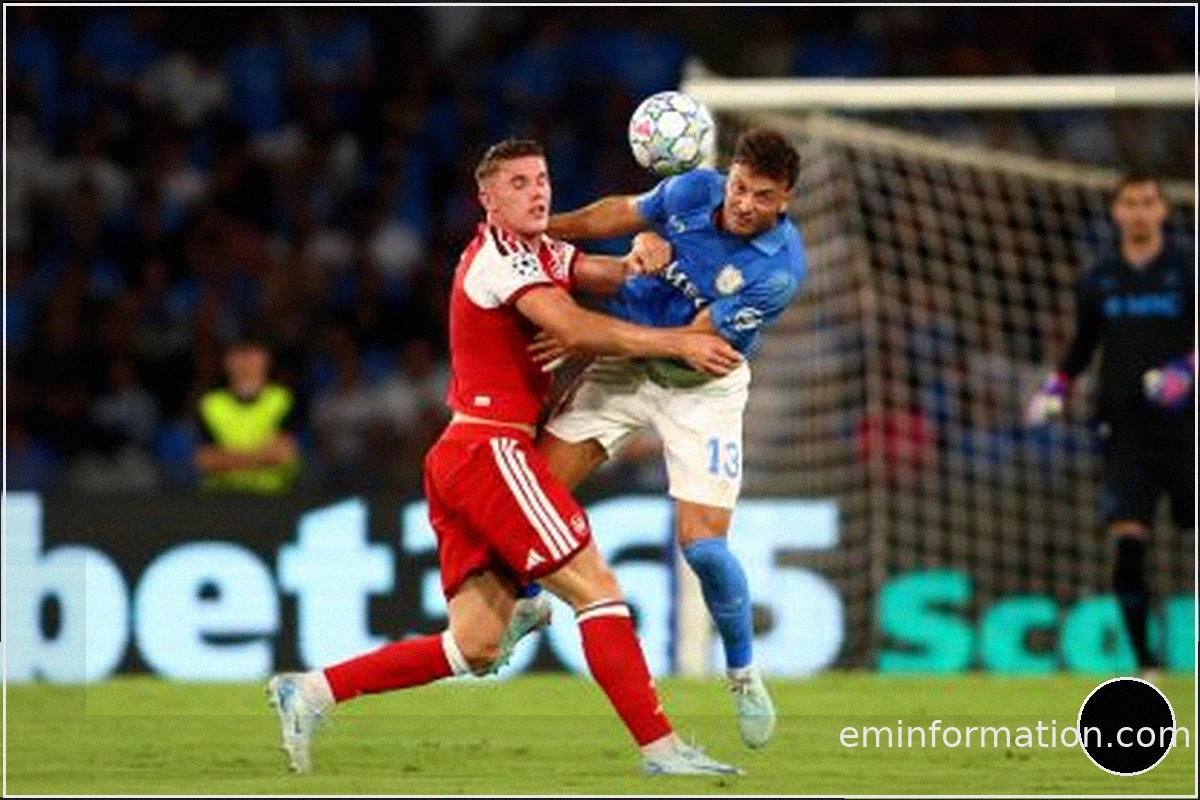
Di Lorenzo: Napoli Defended Too Deep Against Arsenal
Napoli captain Giovanni Di Lorenzo acknowledged that the team defended "a little too deep" during their match against Arsenal. Despite the frustration of three consecutive defeats, Di Lorenzo remains optimistic about Napoli's chances in the Champions League. The home game at the Stadio Ma
Omari Hutchinson: Ruben Amorim Wanted Me at Milan
Omari Hutchinson shared that Ruben Amorim was a significant influence on his decision to join Milan. The Rossoneri coach was reportedly impressed by Hutchinson's performance during a match against Manchester United. The 22-year-old winger was officially introduced as a new Milan player at t
Allegri Praises Arsenal's Unique Defensive Style Ahead of Napoli's Champions League Clash
Napoli's new head coach, Massimiliano Allegri, has expressed his admiration for Arsenal's distinctive defensive tactics, highlighting that such a style is uncommon to witness from English teams. Speaking ahead of Napoli's Champions League fixture against Arsenal, Allegri stressed the critic